
How to Read A STAR Chart

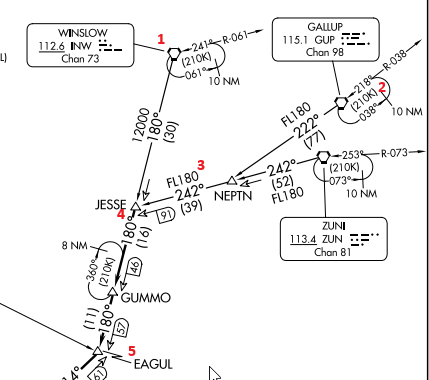
A Star (Standard Terminal Arrival Procedure) is a published instrument approach procedure that are used by pilots and ATC to transition from the en route phase to the approach phase of flight.
It streamlines traffic into the airport, like "gates" into a baseball stadium. There can be multiple entrances to the "gates" with navaids, and will usually transition from the gates to a single route into the airport.
A STAR has three sections similar to a SID (Standard Instrument Departure), the marginal information, plainview, and textual information.
Table of Contents
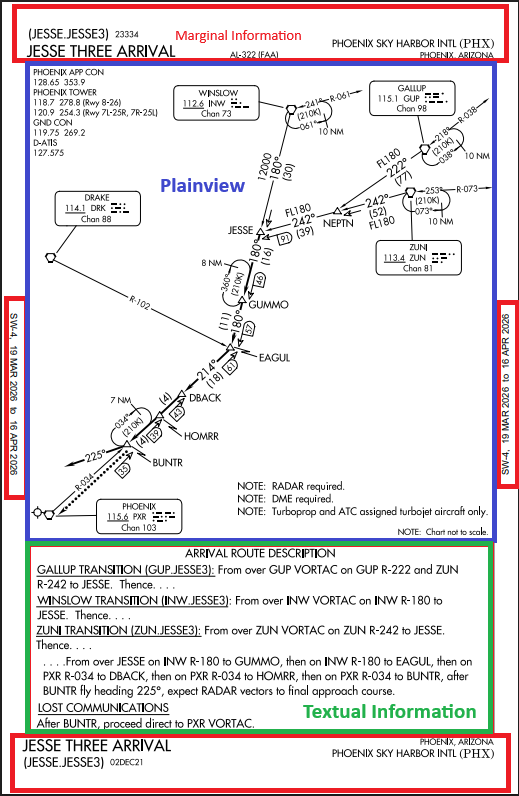
Marginal Information
Margin Information can be found on the top, bottom, and side of a SID.

The top of the page will introduce the name of the the STAR which is the "JESSE THREE ARRIVAL" for PHX airport. In your flight plan, you will put in your transition fix with "JESSE.JESSE3" (transition will be explained in plainview).

The bottom of the page is similar to the top, with the date added.

The side of the page will be the dates valid for the JESEE STAR.
Plainview
The plainview is the section that shows symbols of the airport, routes, arrival course, navaids, and frequencies of the current STAR you are flying.
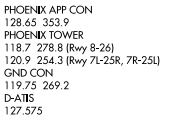
Starting from the top left, we have all the relevant frequencies in the STAR. Frequencies such as the approach control, the digital ATIS, ground control, and tower control are all listed.
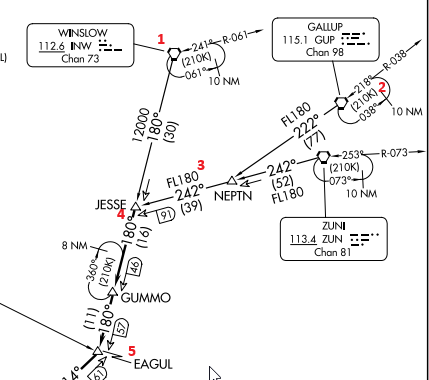
From the top right, we see three VORTACs on the outside all converging into a fix called JESSE. Pilots can come find from those directions, but they will ultimately end up to JESSE and continuing the approach, thus why it is called the JESSE arrival.
- The Winslow VORTAC, one of the VORTAC gates to the STAR, one of the start of transition.
- A holding pattern if ATC instructs the pilot to hold at that VORTAC. (210K) represents the maximum indicated airspeed to hold.
- FL180 means on that transition route, you must fly at FL180. (39) means the route is 39nm. 10NM means 10NM legs for holds.
- JESSE reporting point fix, the fix where all transition routes converge.
- The lightning bolt is NOT the Final Approach Fix like in an approach plate, it is just a pointer to a navaid.
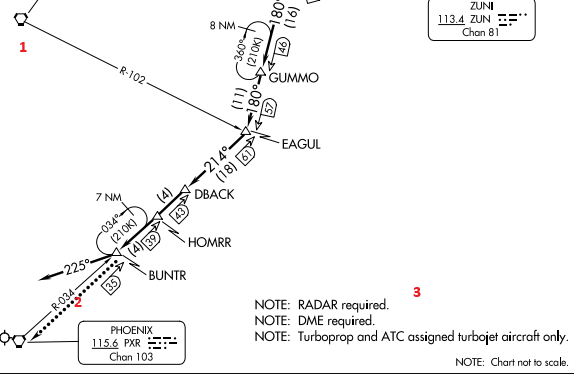
- Nearby VORTAC that can be used to find bearing
- Lost Communication path, if aircraft loses communcation, they fly directly to the PXR VORTAC.
- Notes, aircraft will need to be a turbopop and ATC assigned turbojet with RADAR and DME.
Textual Information
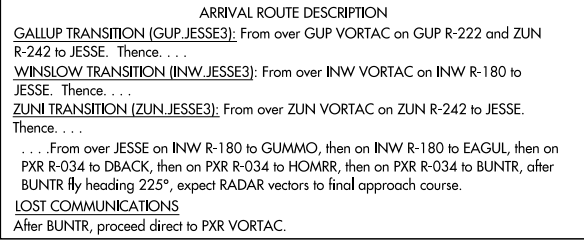
The textual information will give text instructions from the three transitions VORTACs (GALLUP, WINSLOW, AND ZUNI) to JESSE. All three transitions will have different instructions, but once reaching JESSE, they will have the same instructions.
Similar to the plainview, there are textual instructions for lost communications and what VORTAC to fly if an aircraft loses communication.
Legend for STAR
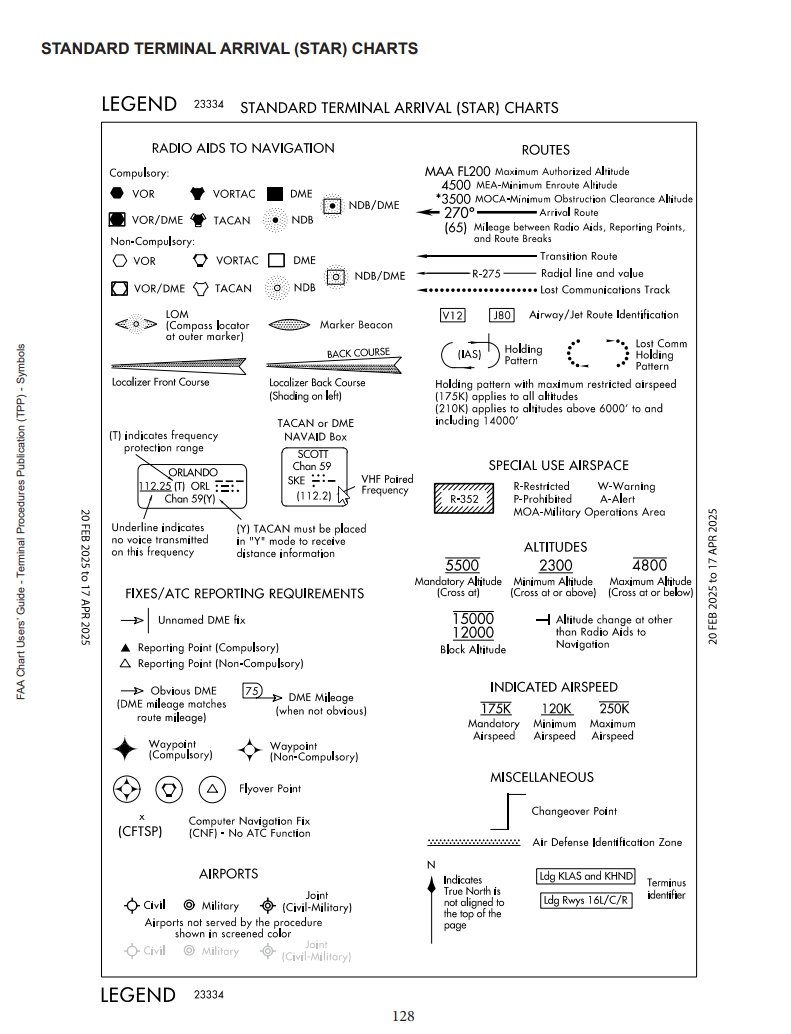
To find every symbol or information about any procedure, you can look up the Aeronautical Chart Users' Guide.
You should also read:

How to Read a TAF
A TAF (Terminal Aerodrome Forecast) is a report that is submitted every 6 hours that is valid for 24-30 hours that forecasts the weather for the destination location. It is used by pilots and dispatchers to obtain forecast weather in order to determine if the…
Continue reading...
How to Read a SID Chart
A SID (Standard Instrument Departure) is a departure procedure used by the pilot and controller to provide obstacle clearance and provide an uniform departure transition from terminal to the departure control. A SID will include climb, heading, and transitions to a fix in order to…
Continue reading...
How to Read a METAR
METAR (METeorological Aerodrome Report) are issued every hour at each reporting locations that reports the current weather valid for 1 hour. METARs are used by pilots, dispatchers, and ATC to obtain current weather information at the location. Check out your local's airport METAR by entering…
Continue reading...